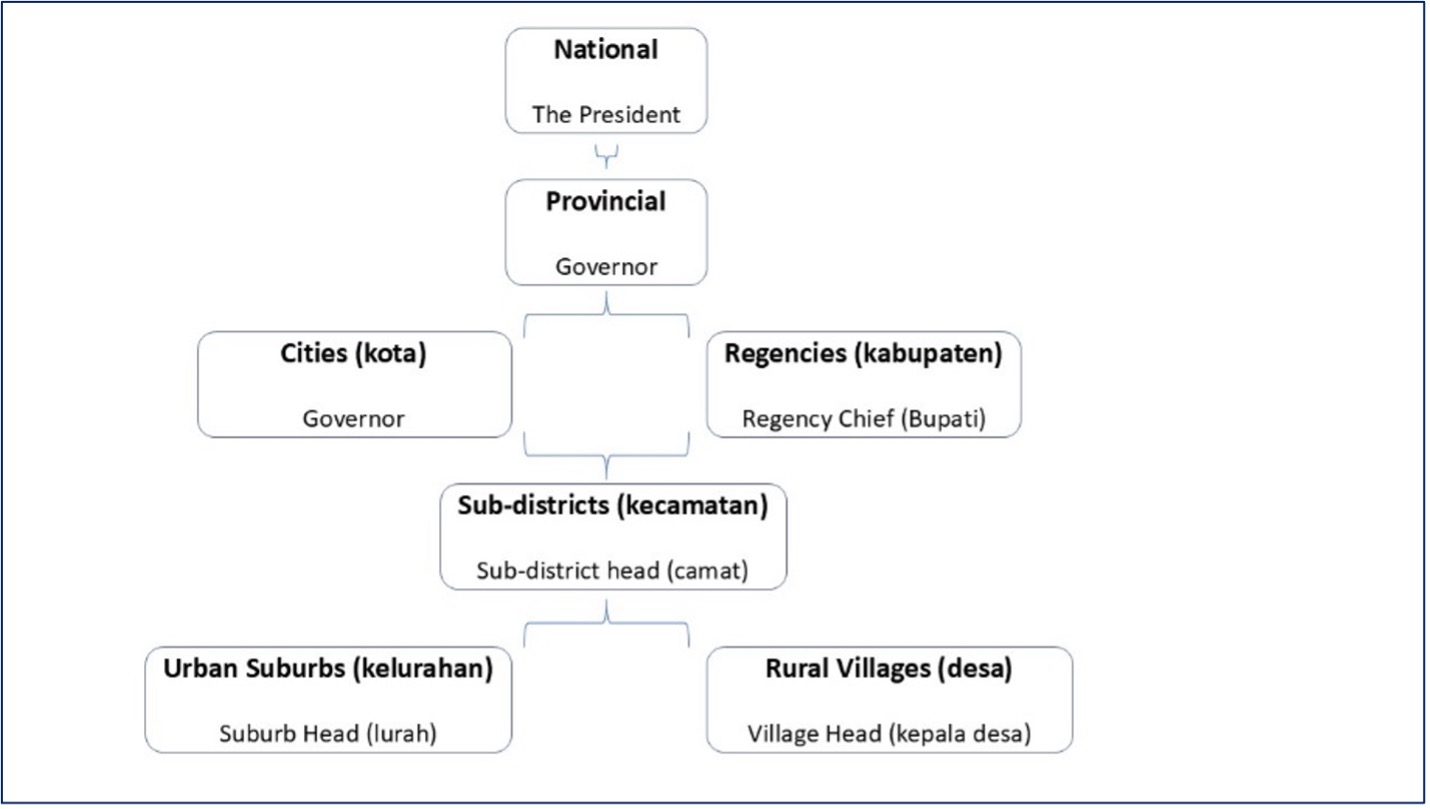
Central Government Public Audit is conducted by Badan Pemeriksa Keuangan, BPK (SAI Indonesia) headquarter. Local Government Public Audit level is conducted by BPK regional offices (SAI Indonesia has regional offices in each province). Regional offices function as external auditors and operate under the coordination of BPK headquarter, which is granted with independence in carrying out audit tasks.
The audit mandate for BPK on local governments is based on several legal provisions:
- 1945 Constitution
- Law number 17/2003 on State Finance
- Law number 1/2004 on State Treasury
- Law number 15/2004 on State Financial Management and Accountability
- Law number 15/2006 on the Audit Board of the Republic of Indonesia.
These regulations provide the legal basis for BPK as an independent institution to conduct audits of local government entities. The legal basis, independence and accountability of BPK regional offices are the same as those of BPK headquarter. The scope of duties of BPK regional office is determined in BPK’s organizational structure and work procedures stipulated in BPK Decree.
Audits of regional governments are carried out by BPK regional offices using the same audit standards and methodologies performed by audits of central government, namely State Financial Audit Standards (SPKN). SPKN was developed by the SPKN Committee formed by BPK headquarter. Audit teams can use experts in carrying out auditing procedures. They can also coordinate or communicate with other institutions during the audit, if necessary.
The scope of local government finance encompasses various aspects, including:
- rights and obligations assessed in monetary units, financial transactions
- local government assets, which include properties, infrastructure, investments, and any other tangible or intangible assets owned by the local government
- separated assets, which designated for specific purposes, such as funds for social welfare programs or environmental conservation initiatives.
All of these objects of local government finance that are either owned or controlled by local governments fall under the purview of audit. The audit scope extends from the formulation of policies and decision-making processes to accountability mechanisms. This encompasses all stages of financial management, including planning, budgeting, execution, monitoring,and evaluation. Audits conducted by the Audit Board of the Republic of Indonesia apply a risk-based audit approach.
The audit outcomes are published at the Summary of Semester Audit Report. The audit reports are submitted to the respective Parliament according to the level of the government being audited.
The follow-up on audit recommendations constitutes an integral part of regional financial accountability and reflects the responsibility of local governments in managing public finances.
BPK Follow-Up Audit Mechanism is fixed in the Article 20 of Law № 15, 2004 regarding Audit of Management and Responsibility of the State Finance. The responsible official is required to follow up recommendation stated in the audit report and give response or clarification to BPK no later than 60 days after the receipt of an audit report. BPK monitors the implementation of the recommendations. Any responsible official not carrying out the established follow up procedure is given administrative sanction.