
Sustainable Development Goals
Local Governance and Global Progress Towards the SDGs
In 2015 the global community adopted the 2030 Agenda for Sustainable Development to end poverty, protect the planet and tackle inequalities.
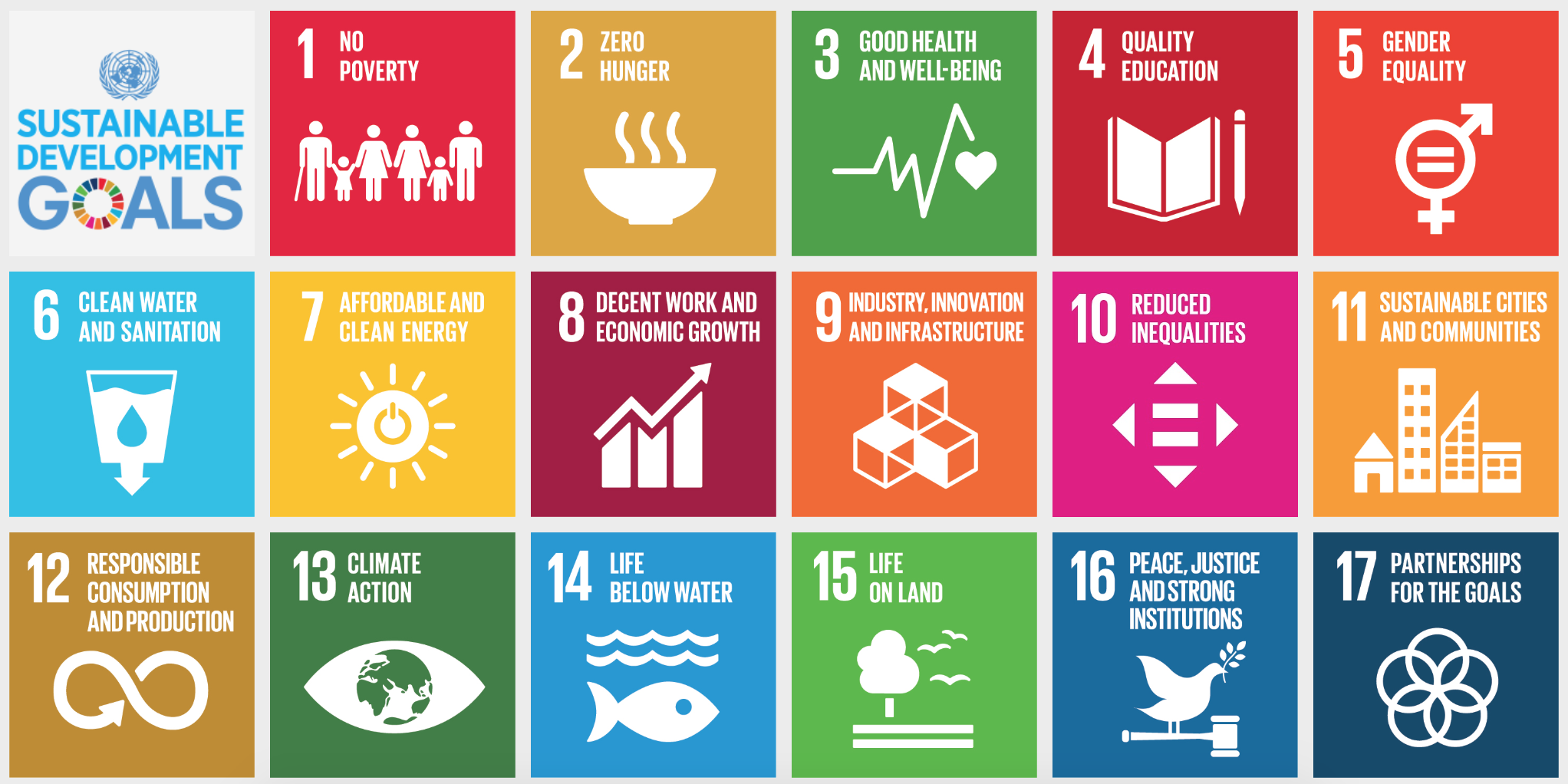
The Sustainable Development Goals were developed as a blueprint within its framework, covering a wide range of critical issues: from eradicating poverty, ensuring equal rights and inclusive opportunities to improving the quality of governance and protecting the environment and ecosystems.
Overall progress across targets based on 2015–2025 global aggregate data (in %)
Achieving Sustainable Development Goals is a complex multidimensional process involving actors at national and global levels. Despite tangible efforts, current progress falls far short of what is required to meet the SDGs.
The UN Sustainable Development Goals Report 2025 estimates that only 35% of all SDG indicators are on track, 47% have moderate and marginal progress, 18% are not being met or have fallen below the 2015 baseline.
On track 18%
Moderate progress 17%
Marginal progress 31%
Stagnation 17%
Regression 18%
The COVID-19 pandemic long-term impact, geopolitical and trade tensions, climate change severely hindered SDG progress. Besides, sustainable funding and long-term investment challenges, which coupled with massive shortcomings in global economic and financial systems, undermine socio-economic development. According to the UN Department of Economic and Social Affairs (UNDESA), the financing gap for sustainable development is US$4.2 trillion per year.
In total, 17 SDGs contain 169 targets, each of which includes a set of 231 quantitative indicators that allow tracking progress towards achieving a particular goal. The global indicator framework was developed by the Inter-Agency and Expert Group on SDG Indicators and agreed upon at the 48th session of the UN Statistical Commission held in March 2017.
Addressing SDGs challenges requires comprehensive measures and coordinated efforts. The UN calls for the whole-of-government approach to overcome negative trends and boost SDG implementation. It is therefore recommended to strengthen the governance and institutional environment by investing in cooperation with local and regional authorities. This approach means collaboration and coordination among all stakeholders, the high quality of public administration and financial management at all levels of governance. In order to provide methodological support to regional authorities, the UN launched a specialized web portal on SDG localization. The resource contains a wide range of methodological materials on strategic planning, implementation and monitoring of socio-economic projects at the local level.
Local government is the closest public administration level to the people primarily responsible for solving everyday problems of citizens. Territorial development, the well-being of residents and the general level of trust in the state are determined by efficient service delivery and financial control on the grounds.
According to the OECD, in 2016, regional and local governments accounted for almost 60% of total public expenditure in OECD countries and almost 40% globally.
The organization estimates that 65% of the 169 SDGs targets would not be achieved without the participation of local and regional governments, which in turn use the SDGs to assess the alignment of local programs with sustainable development objectives and adapt existing national plans and strategies.
Also, one of the factors hindering progress in achieving the SDGs is the lack of accurate, timely and systematized data. Without high-quality evidence base, it is impossible to identify challenges, formulate solutions, monitor implementation and make necessary course corrections.
As part of efforts to monitor progress towards achieving the SDGs, international organizations design various approaches and visualization tools (assess both overall progress towards achieving SDGs and the dynamics of each goal for a specific country). For example, ATLAS of Sustainable Development Goals 2023 (World Bank), SDG Financing Tool (IMF), SDG Financing Framework (IMF), Public Investment Management Assessment (IMF), Measuring distance to SDGs (OECD). The list is not exhaustive.
Building partnerships with diverse stakeholders, including Supreme Audit Institutions and Regional Audit Institutions, makes SDG monitoring more inclusive and comprehensive.
Given their essential role in auditing government finances, SAIs are uniquely positioned to oversee public financial management systems. Providing audits on a government’s budget allocations and expenditures, SAIs ensure
the implementation of development programs and foster transparent, accountable and effective governance.
However, SAIs traditionally focus on scrutinizing state budgets and evaluating in-country public policies while effective public management requires control at all levels. Therefore, improving the quality of local audit is of particular importance. Strengthening local accountability institutions is crucial for accelerating progress on key social and economic priorities.
One of the drivers for the Regional Audit Institutions development and unlocking their institutional potential is to intensify international cooperation and knowledge-sharing. Establishment of ASOSAI Working Group on Audit at the Regional and Municipal Levels is a way to achieve it. The project goal is to create a platform for professional dialogue between SAIs and regional audit bodies, hone professional competencies, study and disseminate advanced audit approaches. Analyzing international experience, comparing different legal systems, identifying similarities or differences between various public audit models will undoubtedly help improve the quality of audits as well public administration in general.