
Pakistan
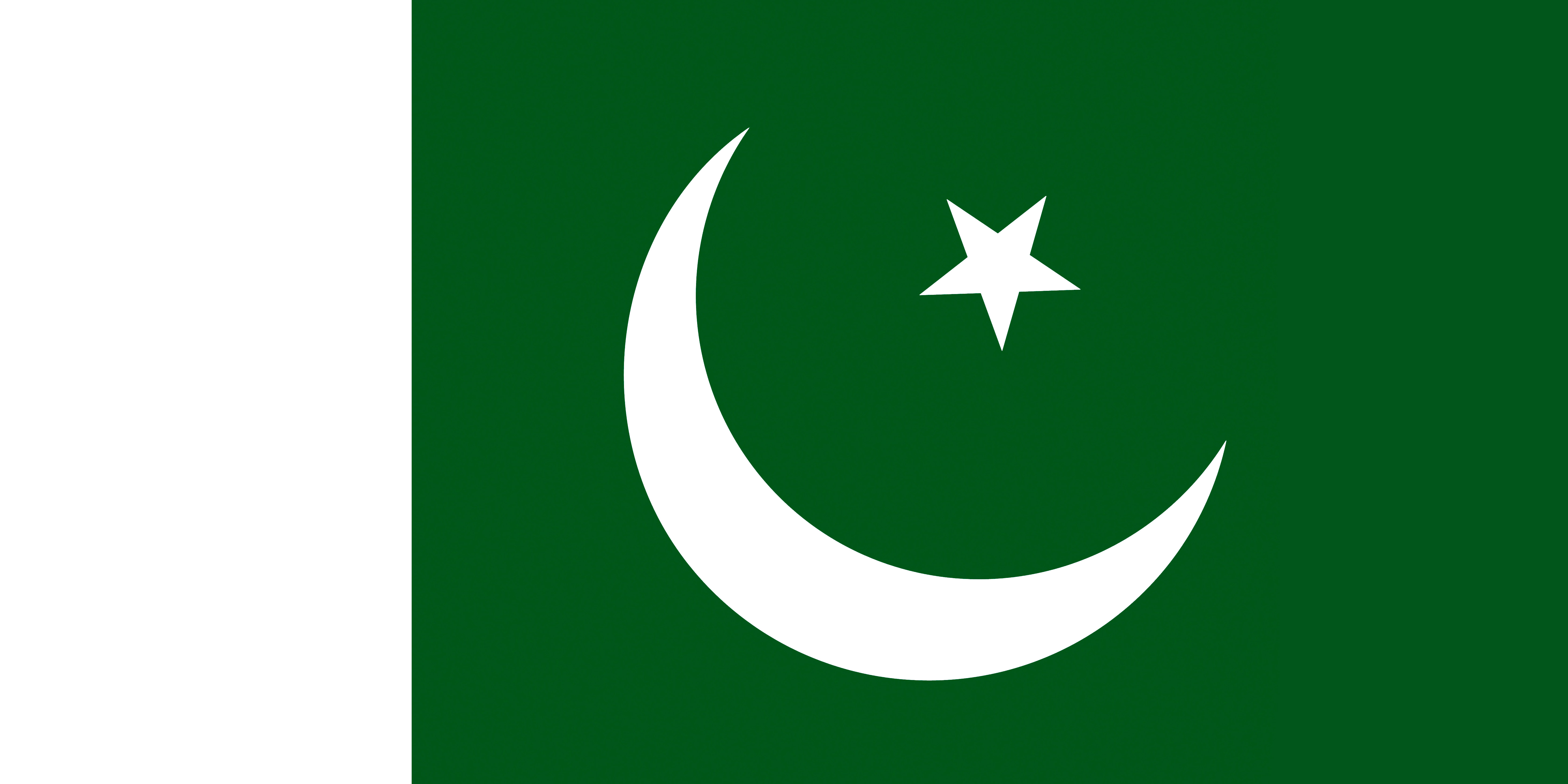
Pakistan is a rapidly developing economy in South Asia with growing industrial and service sectors. The country focuses on infrastructure expansion, energy development, and digital transformation to support long-term growth.
Its strategic location connects South Asia, Central Asia, and the Middle East, making Pakistan an important trade and investment corridor. The government works to improve fiscal stability, attract foreign capital, and strengthen financial governance.
Pakistan operates under a federal system of government. The state administration is divided into federal, provincial, tribal, and territorial governments. These governments are then divided further into a third level of local governments.
Federal Level
Pakistan is governed by a federal Government located in Islamabad. The Parliament of Pakistan, according to the Constitution of 1973, is bicameral and consists of the President and two Houses known as the National Assembly and the Senate. Based on the Westminster system, the government is made up of 3 major branches: Legislature, Executive, and Judiciary. Two major figures of the government are the President and the Prime minister who run the government with support from Cabinet, Ministers, Civil Service, federal agencies and departments.
Provincial Level
Pakistan is divided into four provinces (Punjab, Sindh, Khyber Pakhtunkhwa & Baluchistan), federally administered areas such as Gilgit Baltistan and associated government Azad Jammu and Kashmir. Each province has its government, with Executive, Legislative, and Judicial powers like the Federal Government. Provinces have a significant degree of autonomy and are responsible for a wide range of areas including education, healthcare, agriculture, and law enforcement.
Territorial
Islamabad is the capital of Pakistan and functions as a territorial administrative area under the control of the Federal Government. Islamabad Capital Territory also has its local government system as well that manages local issues.
Local Level
At the local level, Pakistan is divided into Districts, each of which is administered by a Deputy Commissioner or District Coordination Officer (DC/DCO). Districts are further subdivided into towns or tehsils, which are then divided into Union councils which are further divided into villages or urban areas.
Local governments exist at district, tehsil, and union council levels. Local governments of Major cities are named as Metropolitan corporations/Municipal corporations depending on the size of the population. While district and tehsil governments are named.
Districts are administrative units consisting of multiple Tehsils or Talukas. The head of a district is called the "District Nazim or district chairman". Each district also has a District Coordination Officer (DCO), who is a civil servant responsible for coordinating the activities of various departments. Tehsils (in Punjab and Khyber Pakhtunkhwa) or Talukas (in Sindh and Balochistan) are the next level down. They consist of multiple Union Councils. Union Councils (UCs are the basic units of local government in Pakistan. Each Union Council typically consists of several villages or neighborhoods.